
Part 1: Sacrifices; Understanding Atonement, Forgiveness, and Approaching God’s Presence
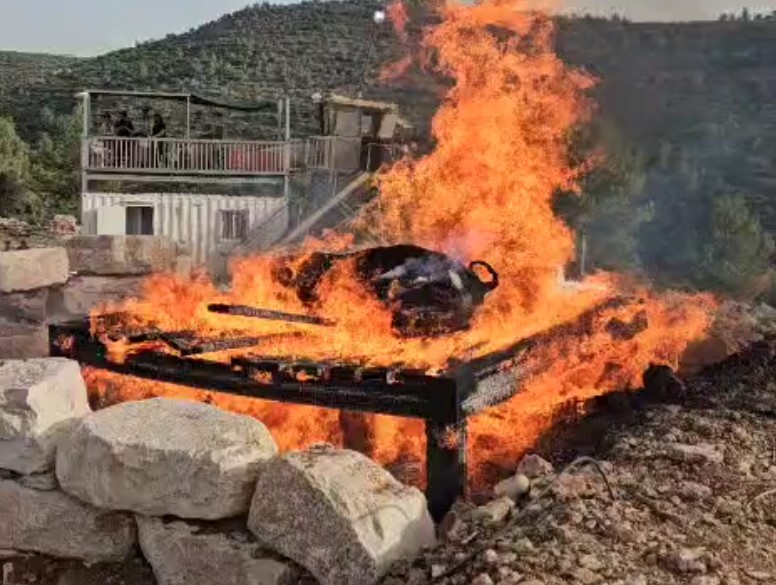
In the absence of a temple and Levitical practices, we have not been taught the relationship between atonement and forgiveness. We assume that atonement is what provides the penalty for our sins. But it goes much deeper than that simple understanding. We need to explore atonement to understand its relation to forgiveness and the sacrifices offered in the temple.
The Hebrew word for atonement is Kaphar, כָּפַר, H3722, meaning to cover, purge, make reconciliation, or cover over with pitch. It is generally understood to provide a covering so that one might approach God without being consumed by His manifest presence.
Atonement was a regular part of the Temple service and was not related to a person’s sin. Rather, atonement provides a protective covering so one would survive an encounter with the Spirit of an all-consuming God. And atonement did not always apply to people. For example: “Seven days thou shalt make an atonement H3722 for the altar, and sanctify it; and it shall be
“Seven days thou shaltmake an atonement H3722 for the altar, and sanctify it; and it shall bean altar most holy: whatsoever touches the altar shall be holy.” Exodus 29:37
“And Aaron shall make an atonement H3722 upon the horns of it once in a year with theblood of the sin offering of atonements: once in the year shall he makeatonement H3722 upon it throughout your generations: it is mostholy unto the LORD.” Exodus 30:10
Did the altar sin? No, an altar cannot sin. But, for the manifest presence of God to accept any item to be used in His service, it needs to have a covering so that any ceremonial uncleanliness can be covered over.God’s mechanism for atonement has always been blood.
“For it is the blood that makes atonement for the soul” Leviticus 17:11
Christians see this passage and automatically assume that the shedding of blood provides forgiveness of sins. But the blood sacrifices did not provide forgiveness of sins. If the sacrifices had provided forgiveness of sins, Yeshua (Hebrew for “Jesus”) would not have had to die on the cross. But it did provide a protective covering so that the worshiper could approach the physical manifestation of God in the Temple. You see, there are two types of uncleanliness: uncleanliness of the flesh, which renders us unclean for ceremonial/temple services, and uncleanliness of the soul, which requires restitution and reconciliation with God.The arguments that Yeshua had with the Pharisees primarily centered on Yeshua taking issue with their prioritizing ritual purity over moral purity. (Cortez, 2026)
To bring greater clarity, atonement enables the worshiper to access God's presence so that His offerings and petitions can be presented. The Levitical blood sacrifices did not provide forgiveness of sin, but rather a covering (atonement) for the flesh. Only God can forgive sins.
“For if the blood of bulls and of goats, and the ashes of a heifer sprinkling the unclean, sanctifies to the purifying of the flesh: How much more shall the blood of Christ, who through the eternal Spirit offered himself without spot to God, purge your conscience from dead works to serve the living God?” Hebrews 9:13-14
Hebrews clarifies that the sacrificial system was a covering for the flesh so that one might approach God for ceremonial purposes. In other words, the Temple sacrifices sanctified for the cleansing of the flesh (i.e.,the physical person), but they did nothing to cleanse the spirit (i.e., the divine soul that survives death). That could only be accomplished by confession, repentance, and restitution. (Lancaster, 2024)
The word “offering” in Hebrew is " korban, קָרְבָּן H7133, and in Greek κορβᾶν G2728. However, the words "offering" and "sacrifice" do not adequately express the concept, as they imply that the person must be deprived of something. It would be more accurately translated as “to come near”. God’s intent is not to deprive us of something so that His anger can be appeased. Rather, He provides a mechanism for us to draw near to Him without being consumed by His presence. The covering provided by the sacrifices allows us to draw near to God. It is His heart’s utmost desire that He physically dwell in the midst of His people, and that they draw near to Him.And this is the purpose of the sacrificial system.
Many in the church have incorrectly assumed that, because we have been given the Holy Spirit on Shavuot (Pentecost), God now dwells only in our hearts and no longer in the Temple. The premise of this assumption is misguided or lacking. When Israel was in the desert, Moses appointed leaders over the tribes who were filled with the Holy Spirit. God also dwelt in the midst of the community within the Tabernacle.
“So Moses went out and told the people the words of the LORD, and he gathered the seventy men of the elders of the people and placed them around the tabernacle. Then the LORD came down in the cloud, and spoke to him, and took of the Spirit that was upon him, and placed the same upon the seventy elders; and it happened when the Spirit rested upon them, that they prophesied.” Numbers 11:24,25
This verse is a picture of the Kingdom to come. He wants both to dwell in our midst and to fill us with His Holy Spirit. Because of this, the sacrificial system will be restored to provide atonement for our flesh, so that we might approach God, who will dwell in our midst, without being consumed.
References
Cortez, R. (2026, February 6). Wisdom in Torah Ministries. Retrieved from YouTube:https://www.youtube.com/watch?v=KMeE51MF4m8
Lancaster, D. T. (2024). Sacrifices From A Messianic Jewish Perspective. United States: First Fruits of Zion.