
Part 2: Sacrifices; Sacrifices Do Not Negate The Work of The Cross. Nor Does the Cross Negate all Sacrifices
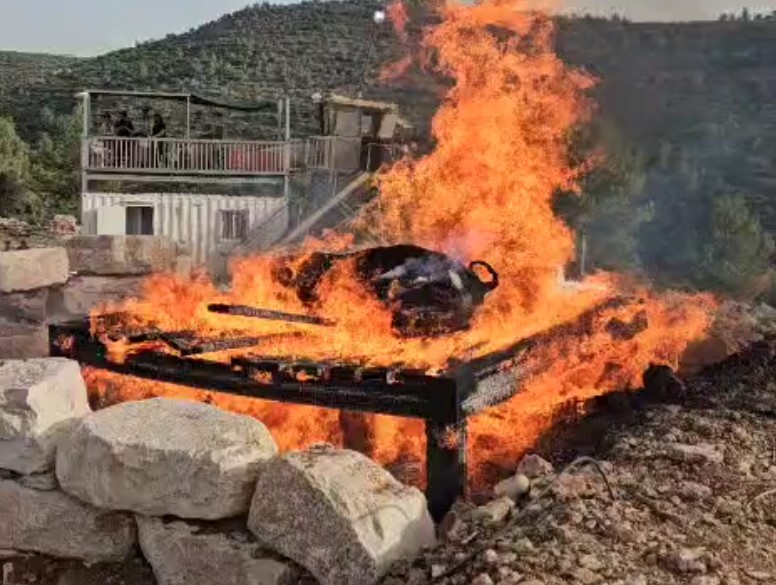
It is very difficult for Christians to reconcile the sacrifices during the Millennial reign, and, rightfully, it is a confusing subject since we have not been taught the foundations of sacrifice. Many believers will emphatically quote “Christ was the final sacrifice,” and there is no need for animal sacrifices. However, the premise of that statement is misguided and lacks the understanding of why it was made in the first place. It also shortchanges the heart of God. Before you start quoting verses, give your self a chance to understand the foundation of the writers of the New Testament. Most of believers interpret the bible through their own theology rather than the context of the culture and the meaning of the original language. The writers of the New Testament must be understood through the culture and the meaning of the original language. For that reason, New Testament writers had very different concepts about sacrifice than we do in the church today.
Before we jump into the foundation of sacrifices, let us review a couple of verses that show sacrifices will be a regular part of temple services during the Millennial reign.
“In those days [a biblical phrase referring to the Messianic age] and at that time I will cause a righteous branch to spring up for David, and he shall execute justice and righteousness in the land. In those days, Judah will be saved, and Jerusalem will dwell securely. And this is the name by which it will be called: “The LORD is our righteousness.” For thus saith the LORD: “David shall never lack a man to sit on the throne of the house of Israel [Messiah], and the Levitical priests shall never lack a man in my presence to offer burnt offerings, to burn grain offerings, and to make Levitical priests shall never lack a man in my presence to offer burnt offerings, to burn grain offerings, and to make sacrifices forever.” Jeremiah 33:15-18
“In that day HOLINESS TO THE LORD shall be engraved on the bells of the horses. The pots in the LORD’s house shall be like the bowls before the altar. Yes, every pot in Jerusalem and Judah shall be holiness to the LORD of hosts. Everyone who sacrifices shall come and take them and cook in them.” Zechariah 14:20
Understanding Levels of Intent
Did you know that there were different types of transgressions,sacrifices, and offerings? Many Christians have a cursory understanding that all sacrifices say something along the lines of
‘Israel brought sacrifices to pay the penalty for their sins.” We erroneously assume that prior to the death and resurrection of Yeshua (Jesus), people procured forgiveness and salvation through the sacrificial system. However, the reality is that most offerings did not even address sin and there were certain transgressions not covered by sacrifice.
So, why would God have them bring sacrifices to begin with?The short answer lies in how scripture distinguishes among the different types of uncleanliness, atonement, and the purposes of offerings. Christians erroneously believe that sin is sin, and there are no differences in sin.Additionally, it is confusing because we often conflate sin, transgression, and iniquity as if they were the same. However, in Exodus, God distinguishes between types of intent when committing wrongdoing.
“Keeping mercy for thousands, forgiving iniquity[עון Avon H5771, anomia G548] and transgression [פשע Pesha H6588, parabasis G384, G93] and sin [חטאת ChetatH2403, hamartia G266, G264]” Exodus 34:7
This verse teaches us about different levels of intent and lays the foundation for understanding the various sacrifices for sin. Let us summarize the categories to bring clarity to the Hebrew and Greek. For easier reference, the Strong’s numbers are included.
Iniquity = עון Avon H5771, anomia G458
• Perversion of what is right, sin driven by a twisted nature
• Know it is wrong, but succumbed to temptation
• Levitical sacrifice used for atonement was the guilt offering
• Leviticus 20:17
Transgression = פשע Pesha H6588, parabasis G3847, G93
• Intentional sin, rebellion against God, affects the whole community
• Taints the soul and the conscience, hardened heart
• No Levitical sacrifice to atone for transgression
• Isaiah 53:5, Psalm 32:5, Isaiah 1:2, John 7:18
Sin = חטאת Chetat H2403, , αμαρτία hamartia G266, G264
• To miss the mark, failure to meet the standard, breaking God’s law
• Without awareness, unintentional sin
• Ceremonially unlcean
• Levitical sacrifice used for purification after sin had been confessed, repented of, and forgiven
• Genesis 4:7, Romans 3:23
Notice that there was no sacrifice for transgression. This is the willful transgression and rebellion against God. This is why David,after his sin with Bathsheba, stated:
“For you do not desire sacrifice, or else I would give it.” Psalm 51:16
David knew there was no offering he could give to atone for his rebellion. He understood that only God could choose to put away his sin. It is also why David drew near to God in repentance, seeking His forgiveness. Once David repented, God chose to put away His sin. But David knew that he could not bring a sacrifice to atone. Remember, sacrifices were offered AFTER the person repented. The temple sacrifices did not remove death. There was no atonement for his rebellion and murder. Please refer to Part 1 to understand the difference between forgiveness and atonement. David should have died for the murder of Uriah.God chose to forgive David because he repented, not because he sacrificed.
“The sacrifices of God are a broken spirit, A broken and contrite heart. These, O God, you will not despise” Psalm 51:17
This is the reason why the cross did not negate the sacrifices, and the millennial sacrifices will not negate the work of the cross. Yeshua is our offering for willful and rebellious transgressions against God. While Levitical sacrifices could cleanse the flesh, only Yeshua could cleanse the soul and the conscience. (Lancaster, 2024)
“If the blood of goats and bulls, and the sprinkling of defiled persons with the ashes of a heifer, sanctify for the purification of the flesh, how much more will the blood of [Messiah], who through the eternal Spirit offered himself without blemish to God, purify our conscience from dead works to serve the living God?” Hebrews 9:13-14
Why did Yeshua die? To prevent the death of our souls. Yeshua was the willing sacrifice for our rebellion against God’s laws.
“If anyone sees his brother sinning a sin which does not lead to death, he will ask [pray for the sinner], and He [God] will give him life for those who commit sin not leading to death. There is sin leading to death. I do not say that he should pray about that. All unrighteousness (G93)is sin (G266), and there is sin not leading to death.” 1 John 5:16-17
“This is not to say we keep the laws to provide atonement.Rather, His work on the cross provides reconciliation for the rebellion of our hearts. That reconciliation can only be accomplished by confession, repentance,and restitution. Yeshua atones for these sins and takes away the death of the soul. Additionally, the atonement allows us to approach the throne of God with boldness. However, atonement does not guarantee forgiveness. That requires repentance.
“If we confess [repent] our sins, He is faithful and just to forgive our sins AND to cleanse [atonement] us from all unrighteousness (G93,Transgression).” 1 John 1:9
Notice the order: 1. Repentance, 2. God grants forgiveness,3. God provides the method for atonement. When we are forgiven (the purification of our conscience), we also need an atonement. For rebellious sin,we need atonement for the soul to prevent death, which is Yeshua. For ceremonial uncleanliness (i.e., contact with a human corpse), we need Levitical sacrifices. Ceremonial cleanliness is necessary for performing temple-related tasks.
Because of the cross, He will write His laws (Torah) on our hearts, renewing the covenant that He will fully implement worldwide during the millennial reign. While Yeshua did the work that sacrifices could not (providinga covering for willful rebellion), the sacrifices will still be needed to purify the flesh.
References
1. Lancaster, D. T. (2024). Sacrifices From A Messianic Jewish Perspective. United States: First Fruits of Zion.