
The Kingdom of God: It is More Than Spiritual
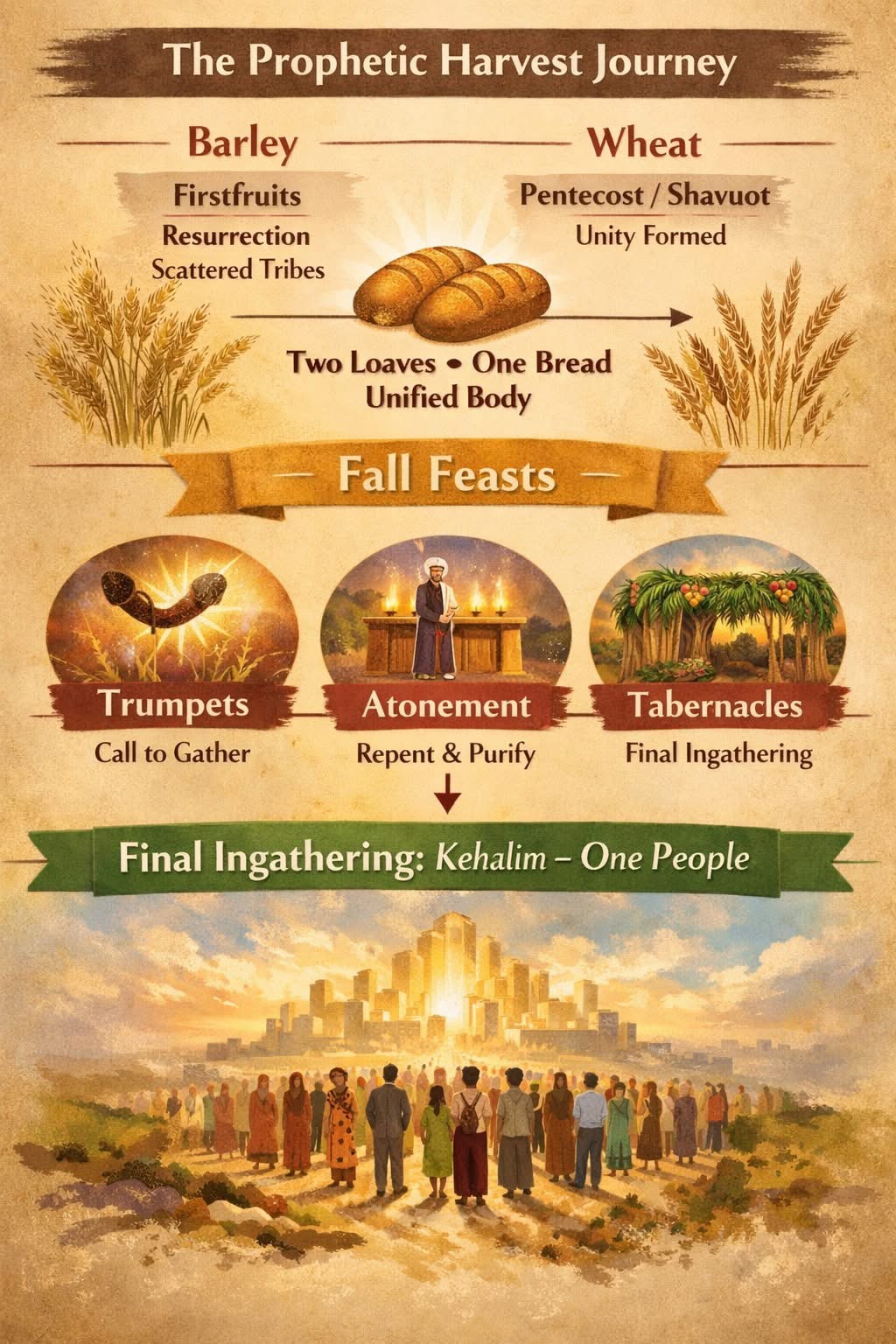
The Kingdom of God: More Than Spiritual
The prophets did not speak in abstraction. They did not describe a distant, invisible reality detached from the earth. They spoke of land, of cities, of nations, of law, of kingship, and of a people restored to a place. To reduce the Kingdom of God to something merely spiritual is not a simplification—it is a departure from the record.
Two witnesses stand in remarkable agreement: Micah and Isaiah. Both saw a future moment described as “the last days,” when the mountain of the Lord’s house would be established above all others. This is not poetic exaggeration, but an elevation of authority. Zion—Jerusalem—becomes the governing center of the earth.
The Godly nations do not resist this reality. They move toward it.
“Come,” they say, “let us go up to the mountain of the Lord… He will teach us His ways.”
This is not conversion by force, nor is it merely internal enlightenment. It is instruction. It is governance. It is the acknowledgment that truth, law, and authority proceed from a specific place chosen by God. “Out of Zion shall go forth the law.” Law requires structure. It requires administration. It implies a Kingdom that is not only believed in—but lived under.
The result is not theoretical peace, but the dismantling of war itself. Weapons are reshaped into tools of cultivation. Nations no longer train for conflict. The economy shifts from destruction to production. Micah adds a detail that grounds the vision even further: every man sits under his own vine and fig tree. This is property. This is security. This is peace that can be measured in daily life.
This is not heaven, removed from earth. This is heaven’s order established on it.
Yet Micah does not allow us to skip ahead to the end. He records the process. Before the Kingdom is revealed in fullness, there is exile. There is pain. There is scattering. Zion groans like a woman in labor. The people are carried to Babylon. The pattern is clear: suffering precedes restoration.
It is here that Ezekiel enters the record and expands what Micah and Isaiah began.
Ezekiel is shown a valley of dry bones—scattered, lifeless, disconnected. The question is asked: “Can these bones live?” The answer is not philosophical. It is prophetic. The bones come together. Flesh forms. Breath enters. What was dead becomes alive again. This is not merely a picture of individual resurrection, though it includes that hope. It is the resurrection of a people.
God defines the vision plainly: “These bones are the whole house of Israel.” All the tribes!
Not part of Israel. Not a remnant alone. The whole house.
Then comes the act that ties the prophetic record together. Ezekiel is instructed to take two sticks. One represents Judah. The other represents Joseph—the scattered tribes of Israel. These are not symbolic of spiritual ideas alone; they represent divided people groups with covenant identity. God declares that He will join them into one in His hand.
“They shall be one nation in the land… and one king shall be king over them all.”
This is the same Kingdom Micah and Isaiah saw.
A united people. A restored land. A reigning King.
And importantly, it is located. “In the land that I gave to My servant Jacob… where your fathers dwelt.” Geography matters. Covenant land matters. The promises are not reinterpreted—they are fulfilled.
Mathew 5-17 Jesus says: “Do not think that I have come to abolish the Law or the Prophets; I have not come to abolish them but to fulfill them.”
Ezekiel goes further still. God declares that His sanctuary will be in their midst forever. His dwelling is not removed from them, but established among them. The nations will know that the Lord sanctifies Israel when His presence is visibly set in their midst.
Now the full picture comes into focus.
Micah shows the nations flowing to Zion.
Isaiah shows the law going forth from it.
Ezekiel shows the people who will inhabit it—restored, reunited, and made whole.
This is the Kingdom of God.
It is spiritual in origin, but physical in expression.
It is heavenly in authority, but earthly in location.
It is eternal in nature, but visible in operation.
To make it only spiritual is to remove the throne from Zion, the law from the nations, and the King from His people. It is to leave the promises suspended rather than fulfilled.
But the prophets do not allow that interpretation.
They speak with one voice: God keeps His Word.
He scatters, but He regathers.
He disciplines, but He restores.
He promises, and then He performs.
The Kingdom of God is not less than spiritual—but it is far more.
It is the restoration of all things as they were intended from the beginning: Heaven and Earth in agreement, God dwelling with man, and a King reigning in righteousness from a real place, over a real people, in a real world made new.
Byron Stinson
Watchman of Migdal Edder